One of the first things you learn in Chinese is to say hello. But do you also know how to say goodbye in Chinese? Knowing how to say goodbye is just as important as knowing how to say hello, yes, no and thank you in Chinese. In fact, knowing how to take leave from someone is part of the basic Chinese you need to master. So, let’s look at 10 frequently used and useful ways to say goodbye in Chinese!
The most common way to say goodbye in Chinese is 再见 (zàijiàn) — literally “see you again.” In casual settings, 拜拜 (bàibài, “bye-bye”) works just as well. Here are 12 ways to say goodbye in Chinese, from casual to formal:
Phrase
Pinyin
When to use
再见
zàijiàn
Standard goodbye (“see you again”)
拜拜
bàibài
Casual “bye-bye”
一会儿见
yíhuìr jiàn
See you in a little while
回头见
huítóu jiàn
See you later (same day)
明天见
míngtiān jiàn
See you tomorrow
周一见
zhōuyī jiàn
See you Monday (swap in any day)
再联系
zài liánxì
Let’s stay in touch
失陪了
shīpéi le
Excuse me, I must go (polite)
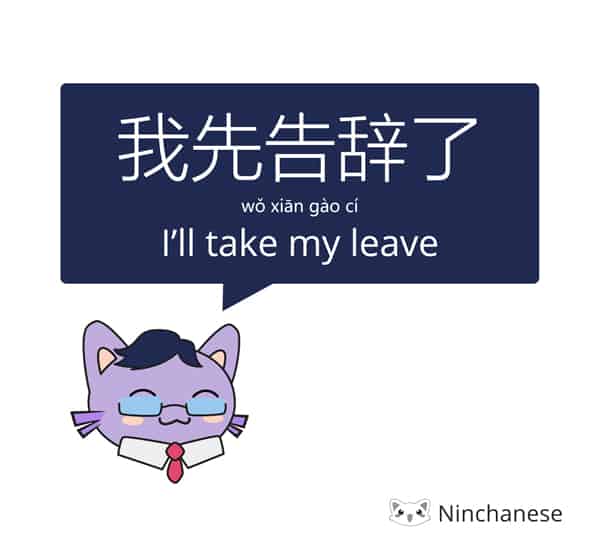
我先告辞了
wǒ xiān gàocí le
I’ll take my leave now (formal)
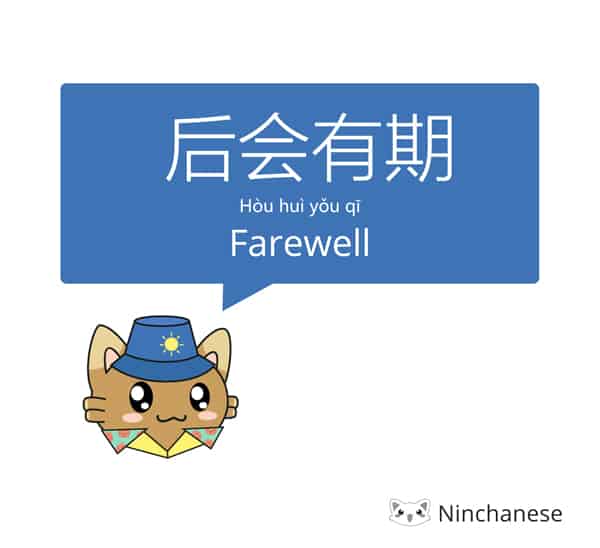
后会有期
hòuhuì yǒuqī
Until we meet again (literary)
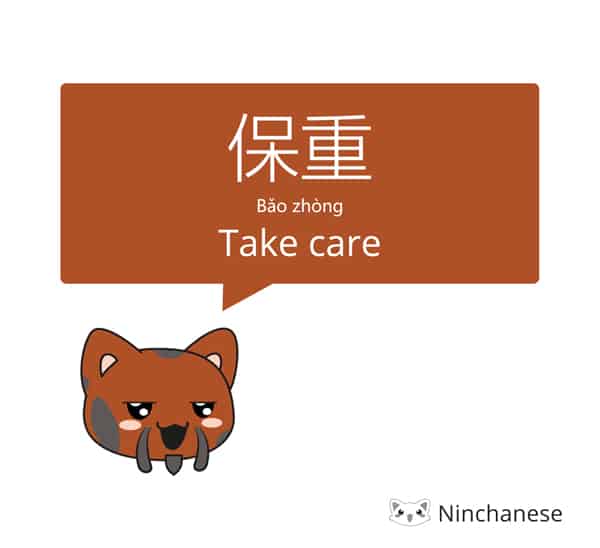
保重
bǎozhòng
Take care (for longer partings)
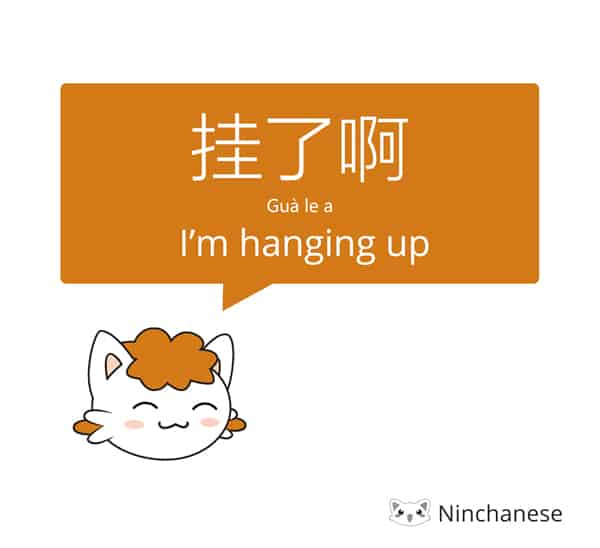
挂了啊
guà le a
“I’ll hang up now” (casual, on the phone)
How do you say goodbye in Chinese?
Today, we’re going to see 10 different ways to say “goodbye “in Chinese. All these expressions you’ll discover here are very common and interesting to know. They each come with a little explanation so you can be sure you’re using the right goodbye in Chinese each time!
#1
再见
zài jiàn
Goodbye; See you
再见 is the most common and standard way to say goodbye in Chinese. You can use this expression with everybody and in all sorts of situations. 再见 literally means “See you again”, as it’s composed of the character 再zài, which means “again” and of the character见 jiàn “to see”. That being said, you can still use 再见 if you’re not planning on seeing the person ever again.
#2
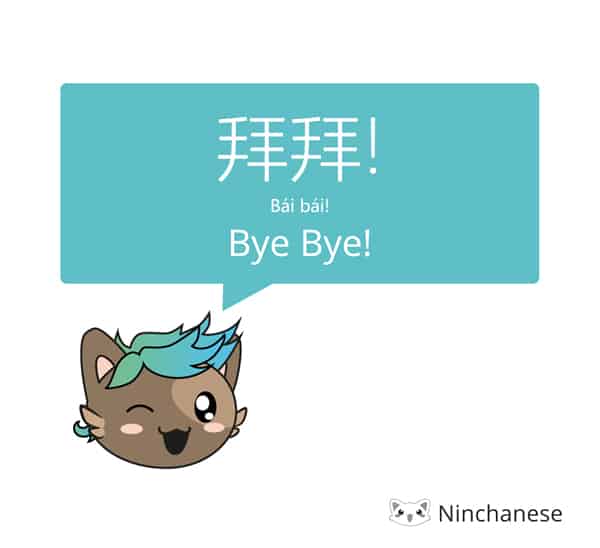
拜拜
bái bái
Bye-bye
The most frequent and easy way to say goodbye in Chinese is going to sound very familiar to you: it’s 拜拜, which means “bye bye” and is pronounced just like in English! It’s casual and informal, but don’t worry, almost all the people use it in China now. 拜拜 was first used in Taiwan, but you’ll hear it used everywhere that speaks Chinese now. As the word 八 (8), pronounced bā sounds close to “bye”, you’ll sometimes see 拜拜 written as 88 online. So if someone writes 88 to you, you know now what they mean!
See you soon: Using 见 to say goodbye in Chinese
The following ways to say goodbye all have something in common: they all use 见! As you saw before, 见 means “to see”. It’s therefore not surprising that it’s used a lot in expressions to say goodbye, especially when you plan on seeing the person you’re saying goodbye to again.
#3
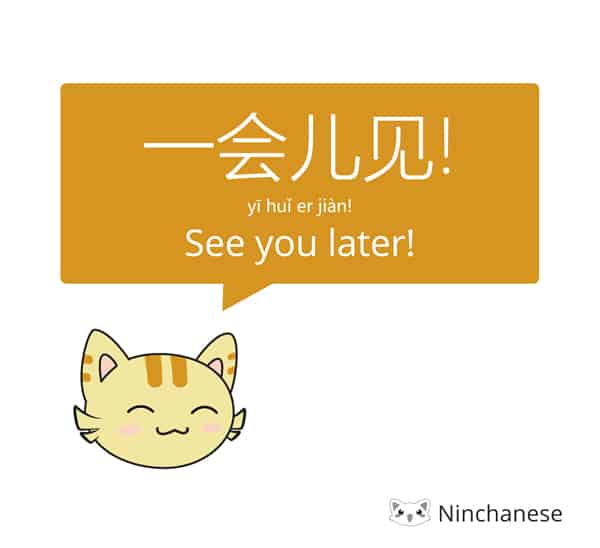
一会儿见
yī huǐ er jiàn
see you later/in a while
#3 bis
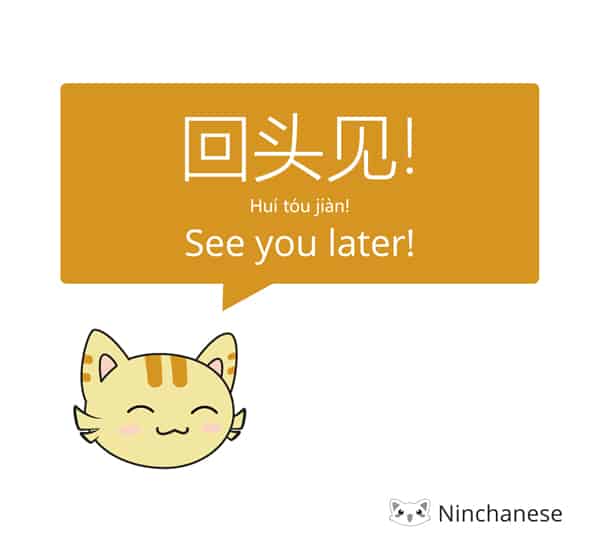
回头见
huí tóu jiàn
see you later
When you want to say “see you later”, two expressions you can use are:
一会儿见. Here, 一会儿 yīhuǐ er means “a little while”, so 一会儿见 very simply means “see you in a little while”.
or 回头见. 回头 literally means “to turn one’s head around” and figurately means “later” so, combined with 见, 回头见 means “see you later”.
#4
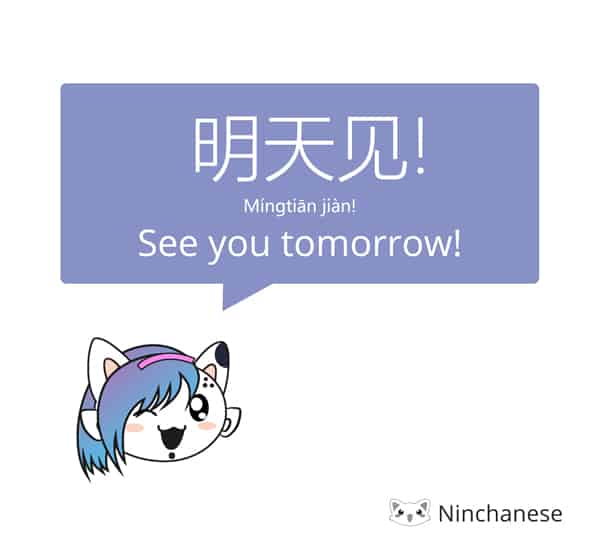
明天见
míng tiān jiàn
see you tomorrow
When the day is over and you want to say “see you tomorrow” to your classmate or colleague, you can say 明天见!This expression is very easy to use in Chinese, and good to know when you want to say goodbye to someone till a specific date.
#4 bis
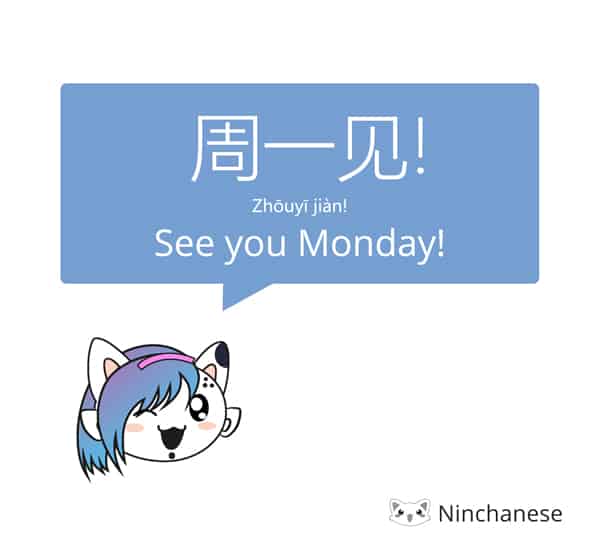
周一见
zhōu yī jiàn
see you on Monday
To say to someone “see you” at a specific date, all you need to do is follow this pattern:
[Specific Date] + 见
For example: If you put the date 周一 in front on 见, you get: 周一见 – See you on Monday, since 周一 is Monday.
#5再联系
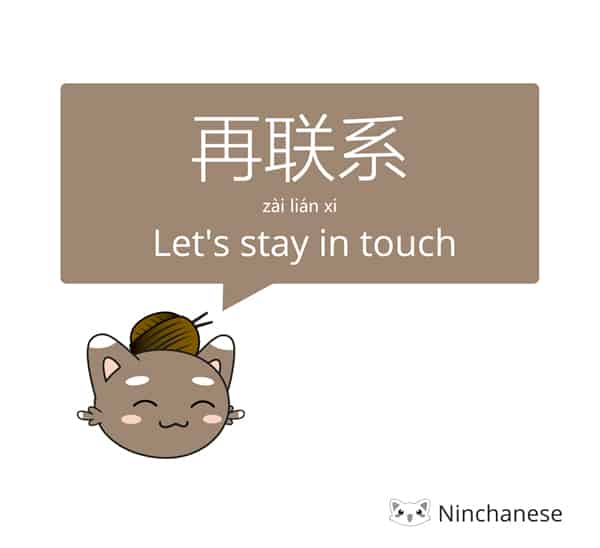
zài lián xi
Let's catch up later/ let's stay in touch
When a conversation is suddenly broken up but you want to show you’ll stay in contact with someone, you can say 再联系. This indicates to the other person you desire to catch up with them later, and shows you want to stay in touch. The expression is made up of the words:
再, which you saw above, and means “again
联系 – lián xi – means “contact, relation, in touch with”.
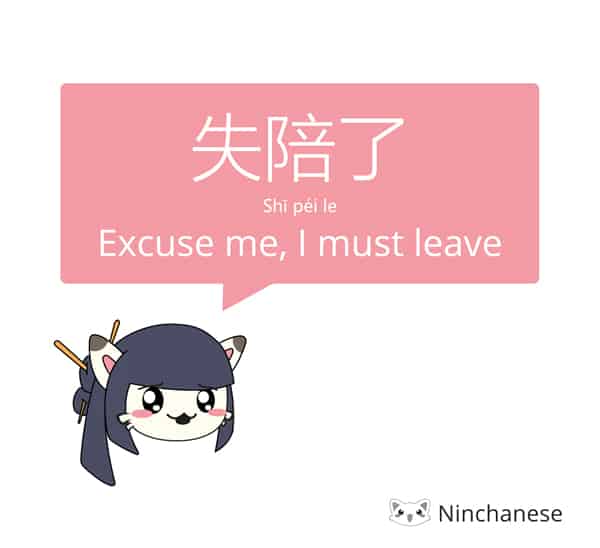
失陪了 is a very polite and formal way to say goodbye. It carries the meaning of “Excuse me, I must leave”. When you’re at a meeting or a party and you have to leave early, use 失陪了 to take your leave. It shows you have good manners in Chinese.
#7
我先告辞了
wǒ xiān gào cí
(Pardon me), I'll take my leave
Way #7 to say goodbye in Chinese is a standard and very polite way to say goodbye. 我先告辞了 means: ” I’ll take my leave”, and nearly implies a “pardon me”. This expression is rather serious and mainly used in special situations. You normally use this expression in face-to-face conversations, especially when talking to someone with a higher social position or that is older in age than you, to show your respect. This expression was a lot more prevalent in the past, and was quite serious. Now, if you hear teenagers say that, they most likely are using this expression in a lighter and more casual manner.
In short, this expression literally means “I’ll take leave first”. If you’re looking for a simpler way to show you want to take leave of your host, you can also say 我先走了 wǒ xiān zǒu le – I’m going first.
#8
后会有期
hòu huì yǒu qī
farewell
You may have heard 后会有期 before. This way to say goodbye is often used in movies, as it’s a little more dramatic than a simple “goodbye”. It means “farewell” or “we’ll meet again someday”. As you can guess, this is an expression to use in Chinese when two people know they won’t meet again easily once they part. You can also use this expression when you don’t know for sure when you’ll meet that person again.
#9
保重
bǎo zhòng
Take care
保重 means to take care. This is a great expression to use when someone is going away on a long journey or leaving far. To show you want to send them off well, you can say 保重 together with 一路顺风yī lù shùn fēng “May the wind be with you”! With these two expressions, you’re wishing them a pleasant journey! What a nice way to say goodbye in Chinese, don’t you think?
A less formal way to say to someone you want them to take care is 慢走MànzǒuTake care!. 慢走 literally means”to walk slowly”, and is used by hosts when guests are saying goodbye. Its a very Chinese way of seeing someone off.
#10
挂了啊
guà le a
I’m going to hang up
Since you already know how to start a phone conversation by saying 喂? wéi?Hello?, don’t you want to know also how to end a phone call? Ending a phone call in Chinese can be tricky, but here’s a simple way to end your conversation: 挂了啊 guà le a, I’m going to hang up. Here 啊a is only a particle word that adds a little emotion to what you’re saying. You can also shorten it to 挂了guà le.
Now that you know 10 different ways to say goodbye in Chinese, you’re ready to end any conversation that ends your way! Isn’t that neat? All’s left is to learn how to say hello, and a few things to say in between, and you’re ready to chat away in Chinese. Practice each time you have to bid adieu to your friends! Do you use other expressions to say goodbye in Chinese? Share them with us below!
“Farewell” is more likely fit the term “告别” rather than “后会有期”, I would use “see you around” for “后会有期”,which is both oral communication style. Farewell and “告别” might be used in kind of formal situation.
Vibrators -
May 27, 2019
In day to day speaking, these are the kind of phrases you can look to use to say goodbye in Chinese. They’re simple and easy to remember and most of them are snappy and friendly to speak. Saying goodbye informally in Chinese is fun and easy if it’s someone you have met a few times and know relatively well, friends, friendly figures or familiar individuals then try and use one of these phrases!

 Ninchanese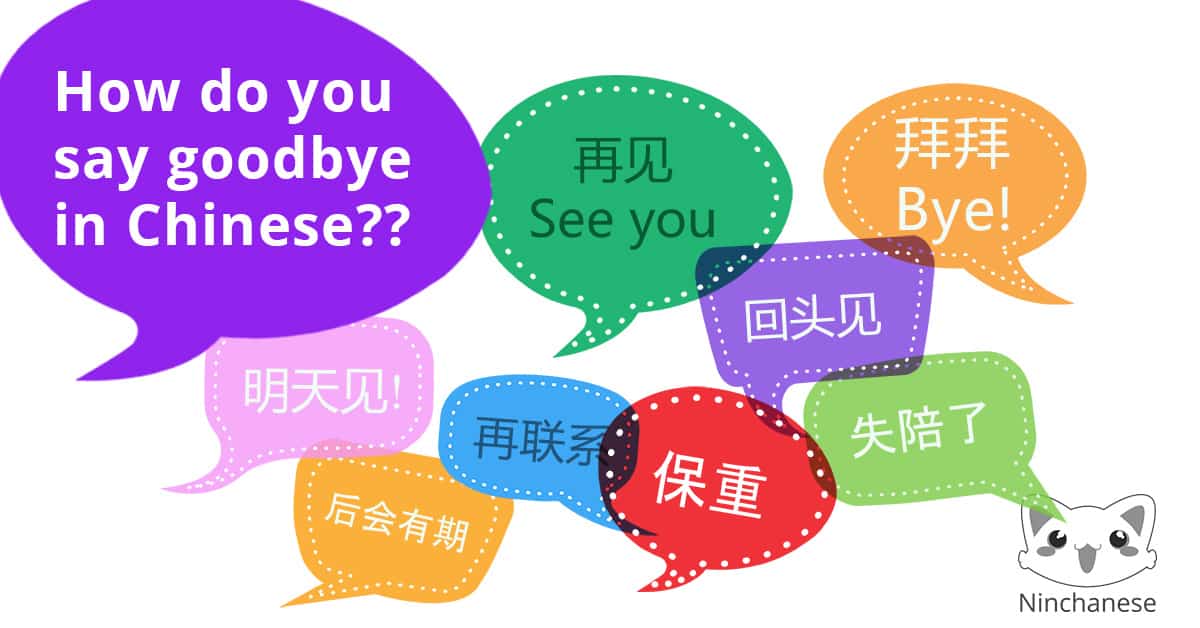






 再联系
再联系





3 comments
Join the conversationPingback: Mandarin Weekly #90 – Mandarin Weekly (每周中文)
F.Q - January 17, 2017
“Farewell” is more likely fit the term “告别” rather than “后会有期”, I would use “see you around” for “后会有期”,which is both oral communication style. Farewell and “告别” might be used in kind of formal situation.
Vibrators - May 27, 2019
In day to day speaking, these are the kind of phrases you can look to use to say goodbye in Chinese. They’re simple and easy to remember and most of them are snappy and friendly to speak. Saying goodbye informally in Chinese is fun and easy if it’s someone you have met a few times and know relatively well, friends, friendly figures or familiar individuals then try and use one of these phrases!
Comments are closed.