
 Ninchanese
Stefan, currently living the fear of the virus as an ex-pat in China, will give you all the tips you need to make it safe with a well-handcrafted list of vocabulary to know. Read Stefan’s story below.
How to handle doors checks? Going to the supermarket?
By now, everybody should have heard of the newly discovered Coronavirus, which is currently spreading worldwide.
People are afraid of getting sick or even worse and are worried about friends and family, not only in China but also everywhere else. This leads to many controversial discussions on how to handle the situation on different levels, from nationwide protection down to individual people’s lives.
As I am a foreigner living in China with (personally, I would say) intermediate knowledge of the Chinese language, this results in many new exceptional situations to deal with. I haven’t been in China for that long and don’t have that much practice in speaking, and there is especially a whole range of phrases and words which are rarely learned during the common Chinese learning path. But being in this Coronavirus situation, there are essential or at least useful Chinese words to know.
Depending on the city and district one lives in, the experience can be different, but I want to give a short insight into some everyday situations. This is an account of situations that happened in the past few weeks in the region I live (Sichuan – Chengdu (southern part)) and the challenges they may bring for a foreigner:

Door interviews:
These can happen often, and the biggest challenge is, of course, the language barrier if you’re not fluent in Chinese.
So, problems can be:
- None of the people can speak English, and your level of Chinese is far from fluent. The difficulty is here.
- They speak Chinese very fast and use different words than the words you know.
- Sometimes, they even speak a local dialect, which makes it even harder.
How to handle communication misunderstanding in Chinese?
Ask them to speak Chinese a bit slower (and hope that they understand you) with 请您说慢一点儿 – Qǐng nín shuō màn yīdiǎn er。
It truly makes a difference. When the Chinese speak slowly, it makes it easier to understand. At least you’ll have a sense of the meaning, even if you don’t understand every single word. Try to explain your situation as well as you can with the Chinese words you know.
They often collect personal information, so they most likely have a list to write it down. Don’t be afraid of the sheet of paper with all the Chinese characters. It’s not that complicated.
First, use a dictionary with an app like Ninchanese to translate the words on the list. With at least a bit of Chinese knowledge and common sense, you’ll guess most of the unknown words pretty easily. See the list below to know more about them.
Main entrance controls:
They put up main entrance control in every building which can be accessed by the public. This also accounts for the building I live in because it’s part hotel, part rented apartments.
As above, they’ll ask for personal information. They will hand you a list to write your info down. Or you may have to tell the security staff the information they want. Keep in mind that many people may have already touched the pen and the list before you. So you may want to wear gloves or bring your own pen.
You also have to scan a QR-Code and fill out a survey (only once). It’s on your phone, so the translation should not be tough – Before entering, you have to do a fever-check. They simply aim with a thermometer at your forehead; that’s it.
Supermarket/Shopping center-lockdowns:
One thing to know is shopping-centers or supermarkets with more than one entrance closed all entrances except one. Sometimes it’s hard to find the entrance, but the mall or supermarket is still open. Sometimes some small centers/shops are entirely closed down.
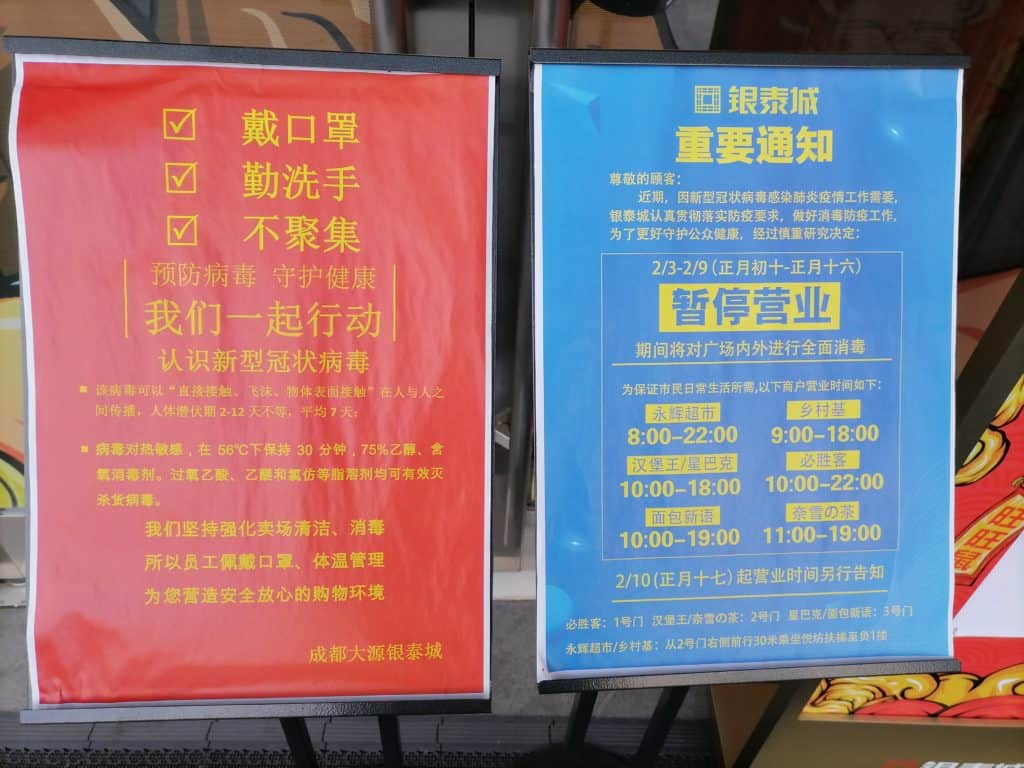
Before entering, you also have to do a fever-check. Check the sign below that says that you have to wear a mask (戴口罩 – dài kǒuzhào – Wear a mask) or you are not allowed to enter. So always wear a mask when leaving your apartment.

How does the Chinese news speak about Coronavirus?
Information about the epidemic is spread frequently through hundreds and thousands of channels in all media. In China, most of it is in Chinese, and only a few of them are aimed directly at foreigners and translated into English. Despite this, with some keywords and expressions, you’ll be able to pick up the general info, as it’s the most crucial info to know to protect you.
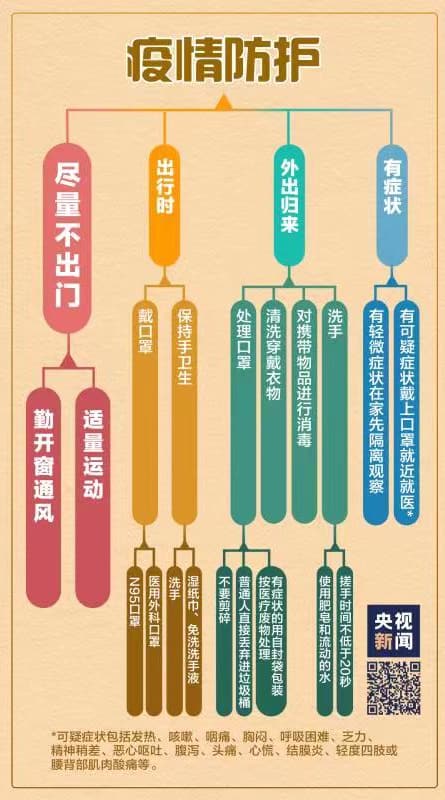
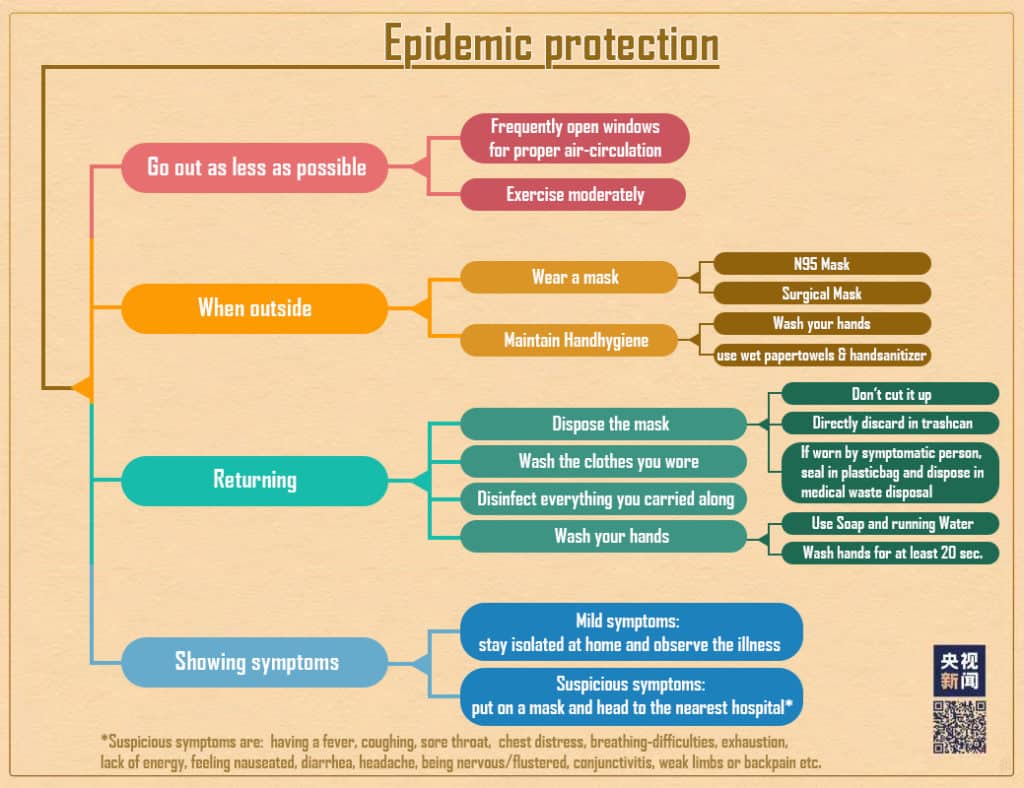
Below is a sheet which was published by CCTV News (央视 新闻 – yāngshì xīnwén). It lists a few common rules on how to increase personal protection. Originally it was only published in Chinese, but I translated it for some foreign friends here, and a Chinese friend helped me share it.
The common rules of safety by CCTV
I found it quite interesting because it’s visually appealing, simple to understand, and is not explicitly attached to the current situation. It also lays out a more common sense of protecting yourself from getting sick. This makes a good starting point to learn some new words and short phrases, which may also be helpful in the future or at least act as an excellent addition to the familiar “Getting sick / Having a cold”-lesson in the Ninchanese app.


epidemic sheet English
Phrases on the sheet:
For a more convenient understanding, the sentences in the English version of the sheet above are translated to sound more natural. However, in the phrases below, I will stick as close as possible to the word-order to make the sentence structure more understandable (which makes them sound more like those typical funny translated signs you often can find). Fill words with no Chinese equivalent are added in [square brackets].
尽量不出门 – jǐnliàng bù chūmén – As much as possible, don’t go out
勤开窗通风 – qín kāichuāng tōngfēng – Frequently open window [for] ventilation
适量运动 – shìliàng yùndòng – [In an] appropriate amount, exercise.
出行时 – chūxíngshí – Going out time
戴口罩 – dài kǒuzhào – Wear a mask
N95 口罩 – N95 kǒuzhào – N95 mask [comment: a particular type of mask]
医用外科口罩 – yīyòng wàikē kǒuzhào – Medical-surgical department mask
保持手卫生 – bǎochí shǒuwèishēng – maintain hand hygiene
洗手 – xǐshǒu – wash hands
湿纸巾,免洗洗手液 – shī zhǐjīn, miǎnxǐ xǐshǒuyè – wet paper towels, no wash hand sanitizer
处理口罩 – chǔlǐ kǒuzhào – handle mask(s)
不要剪碎 – bùyào jiǎnsuì – don’t cut [in]to pieces
普通人直接丢弃进垃圾桶 – pǔtōngrén zhíjiē diūqì jìn lājītǒng – ordinary (no medical) people directly discard [the mask] in [a] trashcan
有症状的用自封袋包装按医疗废物处理 – yǒu zhèngzhuàng de yòng zìfēng dài bāozhuāng àn yīliáo fèiwù chǔlǐ – [mask, used by a person who] has symptoms, use self-sealing bag [to] wrap [it and] refer [to it as] medical waste [for] disposal
清洗穿戴衣物 – qīngxǐ chuāndài yīwù – Rinse clothing [and] other daily used articles
对携带物品进行消毒 – duì xiédài wùpǐn jinxing xiāodú – For carried goods conduct disinfection
洗手 – xǐshǒu – wash hands
使用肥皂和流动的水 – shǐyòng féizào hé liúdòng de shuǐ – use soap and flowing water
搓手时间不低于 20 秒 – cuōshǒu shíjiān bù dīyú 20 miǎo – rub [your] hands time not less than 20 seconds
有症状 – yǒuzhèngzhuàng – having symptoms
有轻微症状在家先隔离观察 – yǒu qīngwēi zhèngzhuàng zàijiā xiān gélí guānchá – having light symptoms, at home first isolate [and] observe
有可疑症状戴上口罩就近就医 – yǒu kěyí zhèngzhuàng dàishang kǒuzhào jiùjìn jiùyī – having suspicious symptoms, put in [a] mask, [get] nearest medical advice
Below are tables containing the medical symptoms, words from the phrases, and additional vocabulary according to the context.
Symptoms
| Characters | Pinyin | Translation | Comment |
| 发热 | fārè | Have a fever | Literally: Send [out] heat |
| Same as 发烧 – fāshāo (send [out] burn) | |||
| 咳嗽 | késou | Cough | |
| 咽痛 | yāntòng | Sore throat | Specific medical term, since 咽 is an anatomical word (pharynx) |
| A more common synonym would be 嗓子 – sǎngzi – throat | |||
| e.g., 我嗓子痛 (My throat hurts) | |||
| 胸闷 | xiōngmèn | Chest pain/distress | 闷 – means tightly closed, sealed but also low spirits/bored/depressed |
| 呼吸困难 | hūxī kùnnan | Breathing difficulties | 呼吸 – breathing: |
| 呼 – hū – breathe out / exhale 吸 – xī – breathe in / inhale | |||
| 乏力 | fálì | Exhaustion | 乏 – lack / short of 力 – power/strength |
| 精神稍差 | jīngshén shāo chā | Lack of energy | 精神 – vigor/spirit/energy 稍 – a little bit / slightly 差 – difference / differ |
| 恶心呕吐 | ěxīn ǒutù | Feeling nauseated | 恶心 – feel nauseated/sick 呕吐 – vomit / throw up |
| 腹泻 | fùxiè | Diarrhea | Very medical term |
| A more common synonym would be 拉肚子 – lādùzi – have diarrhea / an upset stomach | |||
| 头痛 | tóutòng | Headache | |
| 心慌 | xīnhuāng | Being nervous/flustered | 慌 – panicky / in a hurry / flustered |
| 结膜炎 | jiémóyán | Conjunctivitis / Pink eye | Very medical term |
| A more common synonym would be 火眼 – huǒyǎn, which literally translates to “fire eye.” | |||
| 轻度四肢 | qīngdù sìzhī | Weak limbs | 轻度 – literally: light/soft degree/level 四肢 – four limbs |
| 背部肌肉酸痛 | bèibujīròu suāntòng | Backpain | 背部 – the back part |
| 肌肉 – muscle | |||
| 酸痛 – literally: sour ache/pain (this relates more to muscle ache/soreness, similar to the one experiencing after exercising too hard) |
Words from the phrase sheet
| Characters | Pinyin | Translation | Comment |
| 疫情 | Yìqíng | Epidemic Situation | Shortform for 疫病 – yìbìng – epidemic disease 情况 – qíngkuàng – a situation |
| 防护 | Fánghù | to defend / to protect | |
| 勤 | qín | Frequent/regular/constant | Also as a noun: Attendance |
| 适量 | shìliàng | appropriate (amount/quantity) | Shortform for 合适 – héshì – suitable/appropriate 数量 – shùliàng – amount/quantity |
| 口罩 | kǒuzhào | Mask (covering nose and mouth) | 口 – Mouth 罩 – N: Cover V: to cover/wrap |
| 湿纸巾 | shī zhǐjīn | Wet paper towel | Literal translation |
| 洗手液 | xǐshǒuyè | Liquid soap | 洗手 – wash hands |
| 液 – liquid/fluid | |||
| 免洗 | miǎnxǐ | ~Not have to wash Also disposable in meanings of a disposable cup | 免 – to exempt /excuse/avoid/avert 洗 – wash(ing) |
| 剪碎 | jiǎnsuì | Cut sth. into pieces | 剪 – scissors/clippers, to cut/clip 碎 – break down (into pieces) |
| e.g., 打碎 – dǎsuì – smash sth. Into pieces | |||
| 丢弃 | diūqì | Abadon / discard | 弄丢 – nòngdiū – to lose 放弃 – fàngqì – to abandon/give up |
| 症状 | Zhèngzhuàng | Symptom | 病症 – bìngzhèng – disease, illness 形状 – xíngzhuàng – form, shape, appearance |
| 自封袋 | zìfēng dài | Self-sealing bag | 自封 – isolate/confine oneself 袋 – bag/sack |
| 医疗废物 | Yīliáo fèiwù | Medical Waste/Trash | Literal translation |
| 清洗 | qīngxǐ | Rinse/wash/clean/purge | |
| 穿戴 | chuāndài | Apparel/clothing; get dressed/to dress | Includes clothing (put on by using 穿) and “accessories” (put on by using 戴) |
| 衣物 | yīwù | Clothing and misc daily used articles/personal items | 衣服 – yīfu – clothing/clothes 物品 – wùpǐn – article/goods |
| 携带 | xiédài | Carry/take along | |
| 消毒 | xiāodú | Disinfect/sterilize | 消 – disappear/vanish/eliminate 毒 – poison/virus/toxin |
| 搓手 | cuōshǒu | Rub your hands | 搓 does not contain the water-radical like 洗, so it’s only about the hand’s movement, not about washing hands. Combining it with 洗 results in 搓洗 –cuōxǐ – hand-wash (clothes) |
| 隔离 | Gélí | to isolate/separate | |
| 观察 | guānchá | Observe/watch/survey | 观众 – guānzhòng – spectator, viewer 察看 – chákàn – watch, observe, inspect |
| 可疑 | kěyí | Suspicious/dub |
Additional Words
| Characters | Pinyin | Translation | Comment |
| 新型冠状病毒 | Xīnxíng | New type / new kind Coronavirus | 冠状 – coronary/crown-shaped 病毒 – virus (medical & computing) |
| Guānzhuàngbìngdú | |||
| 肺炎 | Fèiyán | Pneumonia, | 肺 – lungs 炎 – inflammation |
| Inflammation of the lungs | |||
| 患者 | Huànzhě | Patient, Sufferer | |
| 治疗 | Zhìliáo | to treat (an illness), Medical treatment, Therapy | |
| 密切 | Mìqiē | Close, Closely, | |
| 医学观察 | Yīxuéguānchá | Medical Observation | |
| 感染 | Gǎnrǎn | Infection, to infect, to influence | |
| 传染病防治法 | Chuánrǎnbìng | Law on prevention and control of infectious diseases | 传染病 – infectious disease 防治 – provide prevention & cure 法(律) – law |
| Fángzhì fǎ | |||
| 疾病 | jíbìng | Disease/sickness/illness | |
| 确诊 | Quèzhěn | Make a definite diagnosis | 确定- quèdìng – definite, be sure, confirm 诊断 – zhěnduàn – diagnose |
| 病例 | bìnglì | (medical) case, | 疾病 – jíbìng – disease/sickness/illness 例子 – lìzi – example/case |
| Occurrence of illness |
Thanks, Stefan, for these handy guidelines and vocab about the coronavirus and the protection measures taken in China around it. We hope these will help you stay safe and healthy in China, little dragons!
Would you like to learn these words on Ninchanese? Let us know in the comments below!
Stefan and
The Nincha Team
Stay in touch with us on Facebook, Twitter, Instagram, and Pinterest.
Learn Chinese the fun way
Try Ninchanese today.
Start learning Chinese with Nincha. It’s free to use!